
5. LIFE IN PARIS
1. Studies
Study of Western art was considered possible only at the École Nationale Supérieure des Beaux-Arts (ENSBA) in Paris. Consequently, between the 1920s and 1950s, some 140 Chinese artists undertook the same journey to be able to enroll there.
The Director of SAFA Liu Haisu, who had met the sculptor and director of ENSBA Paul Landowski (1875-1961) during his stay in Paris between 1929 and 1931, sent him a letter in French to recommend his former student, later a professor, Yan Dehui. With the recommendation letter, Liu also attached a list of Yan’s works with their price. As a result, Yan was admitted to ENSBA on April 21, 1938 and worked in the studio of Henri Bouchard (1875-1960), a sculptor originally from Dijon, renowned in his era and the creator of numerous public monuments.
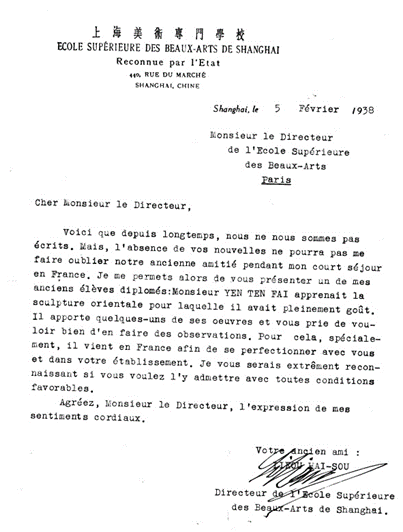
Letter from Liu Haisu to Paul Landowski, Director of ENSBA
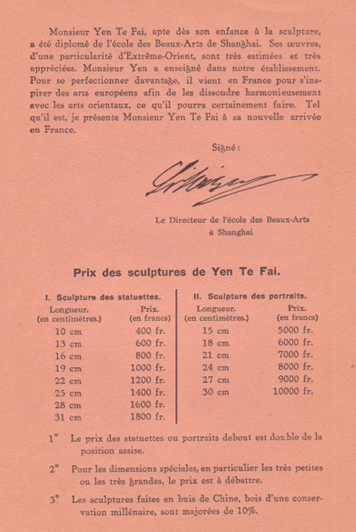
Letter of recommendation by Liu Haisu, including the prices of Yan Dehui’s sculptures
Yan Dehui was a diligent student, as the School’s attendance sheets reveal. Throughout his schooling, several prizes were awarded for his works. There he met up again with Hua Tianyou (1901-1986), arrived in France in 1933. From 1938 to 1943, both attended the courses of Bouchard and the Académie de la Grande Chaumière.
After Bouchard left ENSBA in 1945, from February 1946 Yan enrolled successively in the studios of Saupique, Gaumont, Jeanniot and Gimond, until October 1949, when he left the School permanently.
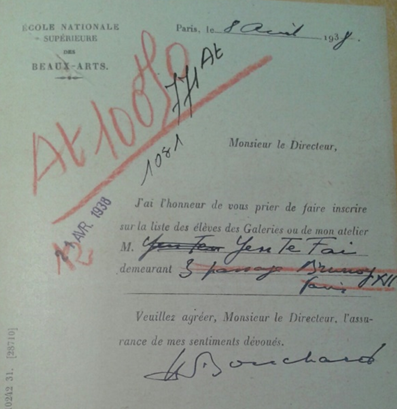
Registration in Henri Bouchard studio
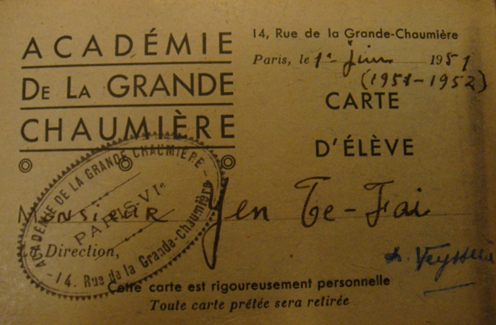
Registration at the Grande Chaumière
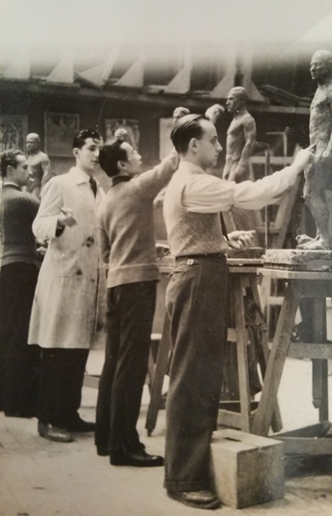
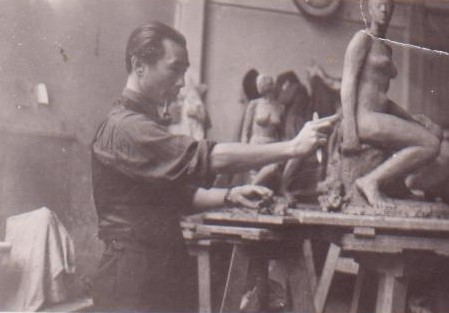
ENSBA
Just as during his training in China, he diversified his production between busts and nudes, between subjects emanating from Chinese tradition and Western-inspired representations, between monumental statues and small boxwood subjects.
In addition to the art of portraiture, what he perfected above all was the representation of the human body – anatomy lessons, drawing and sculpture from live models, thus breaking with the classical Chinese educational system. Other Chinese artists had preceded him in this path, such as Lin Fengmian, Liu Haisu, Pan Yuliang, Xu Beihong, to name but a few. The representation of the nude in China had constituted, in the course of the 1920s, a subject of artistic quarrel between the proponents of the Chinese tradition and those of modernity.
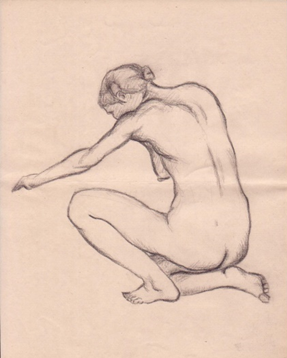
Yan Dehui, Study of a Nude
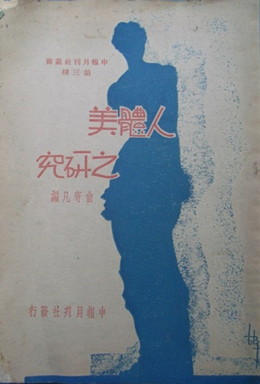
Yan Dehui Collection
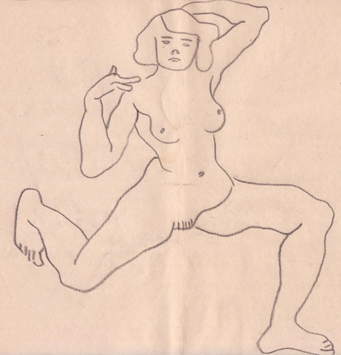
Yan Dehui, Study of a Nude
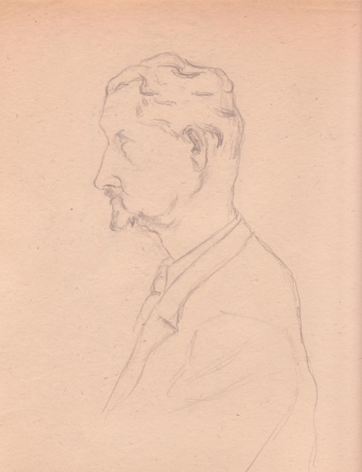
Yan Dehui, Portrait of a Man, Profile
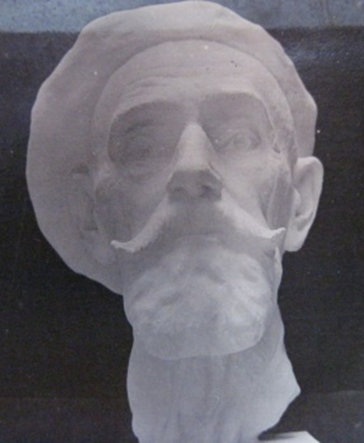
Yan Dehui, The Man in a Beret. Plaster sculpture exhibited at the Grand Palais during the Salon of the SNBA, Paris, 1952
This type of academic training greatly influenced this generation of artists, although some of them later moved on to abstraction, which was more in accordance with the post-war desire for change in Europe.
His interest in the literary arts instilled by his father from an early age aroused his desire to discover French culture through the works of its classical authors, of which he bought complete collections. His learning of French was not limited to everyday life, but included the classics; he wrote long vocabulary lists from plays by Molière and other great writers.
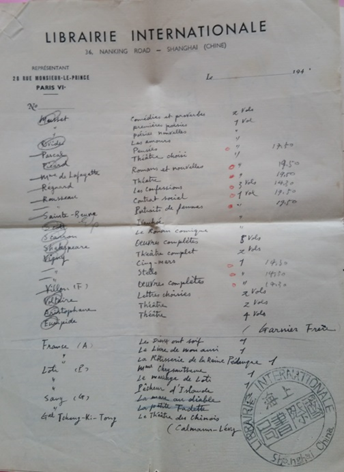
List of books
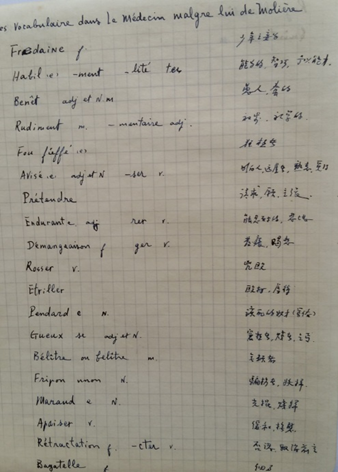
Vocabulary list
Concurrently, he aspired to deepen his knowledge of Chinese culture and registered at the Sorbonne’s Faculty of Letters, where he completed the program in Advanced Chinese Studies from 1941 to 1946.
He was extremely studious maintaining a busy schedule with lessons from 8 to 12 a.m. or from 1 to 5 p.m. at ENSBA in Henri Bouchard’s studio, and devoting the rest of his time to studying French, working on his own creations, attending lectures at the Sorbonne and practicing sculpture from live models at the Académie de la Grande Chaumière.
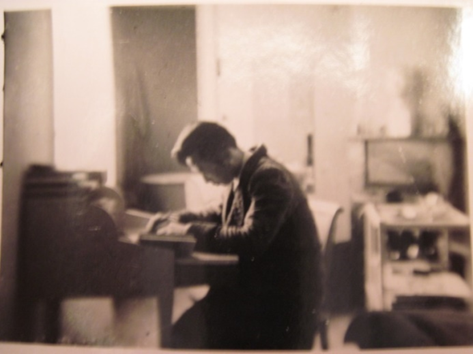
Study of the French language and culture
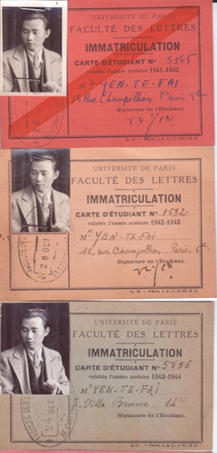
Faculty of Letters student cards
2. Surviving in Paris during World War II and the Reconstruction years
During the war, faced with financial difficulties, he had to abandon a thesis project “Chinese sculpture under the Tsin and Souei (Jin and Sui) Dynasties” started in 1941 under the direction of Paul Pelliot, professor of Chinese literature and art at the Institute of Advanced Chinese Studies of the Sorbonne. He interrupted his studies at the ENSBA between June 1944 and February 1946, the urgent priority being to secure a means of subsistence in order to survive.
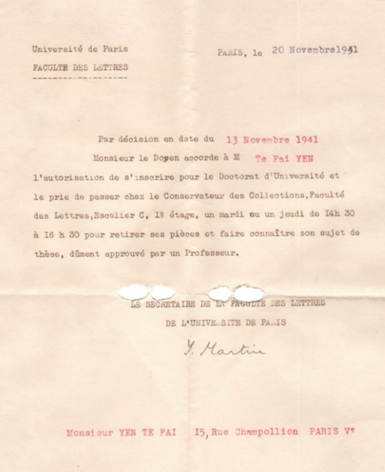
Registration Authorization to the doctoral thesis, 1941
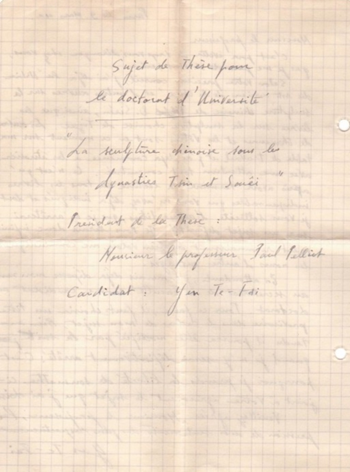
Thesis subject, March 1942
During this period, Yan moved several times, from 123 Boulevard Saint-Michel to 2 Rue Racine, then to 15 Rue Champollion, still in the Latin Quarter. Two other addresses – 6 Rue Victor Cousin and 14 Rue Rambuteau – are also mentioned in administrative archives. For most Chinese artists, paying rent proved to be problematic.
During the years of Nazi occupation in France, Chinese students faced extreme hardship and lived in severe poverty. China, in a war economy, had suspended the payment of scholarships, forcing artists to find their own means of support. Solidarity within the community was crucial to help them endure these difficulties. The Association of Chinese Artists in France provided both moral and material assistance, and several artists were registered at its headquarters, giving them an official address.
In 1941, Yan spent some time in Saint-Chamond, in the Loire region, where Chinese workers had once been employed during the First World War at the Forges et Aciéries de la Marine (Naval Forges and Steelworks), a factory specialized in producing artillery equipment.
In 1942, to support his scholarship application to the National Office of French Universities and Schools, he mentioned his rural civil service internship at Marly-le-Roi and and wrote, ‘I would be very happy to work in the fields this summer to show my deep gratitude to France, from whom I have received a high artistic culture. Yet occupied France was unable to grant his request.
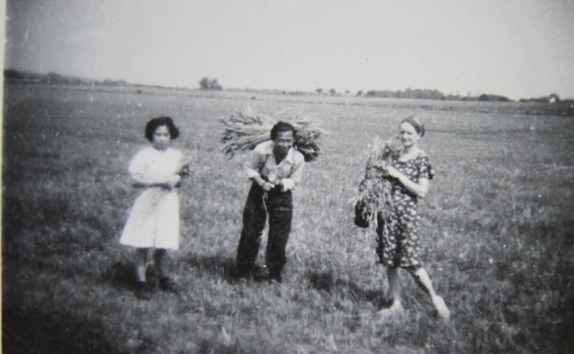
On the left, Zeng Yuran, on the right, Denise Ly-Lebreton, Li Fengbai’s wife
Upon his return to Paris, he was briefly accommodated by Li Fengbai at 14 rue Furtado-Heine, before becoming an official tenant in January 1943 at the headquarters of the Association of Chinese Artists in France, located at 7 Villa Brune in the 14th arrondissement.
Like most of his compatriots, Yan Dehui experienced very painful moments during these troubled years. The situation of his family in a country also at war was of great concern to him. Letters he received from China reported sufferings due to Japanese occupation, hunger, spread of diseases such as measles, plague, scarlet fever, ascariasis, and pneumonia… While the price of rice rose dramatically, medicine and money were hard to come by.
Yan learned of the death of his dear grandmother Fang and, in October 1940, that of his elder sister Yan Zhidao, who left behind five young children. Their mother, Yan Shenyan, helped their father raise them, but she herself contracted dengue, leaving her health fragile for several weeks. Both Yan’s elder brother and younger sister lost their first two children. In France, weakened by hardship and deprivation, Yan contracted shingles, from which he took a long time to recover.
However, during this period, he continued working in boxwood, creating numerous religious sculptures, mainly the Mile (Maitreya) Buddha, which he sold to shopkeepers and Chinese restaurant owners to earn a few cents to eat, buy sculpture supplies and pay his rent. His meals often consisted of a stew with a little meat and lots of potatoes, which lasted for several days.
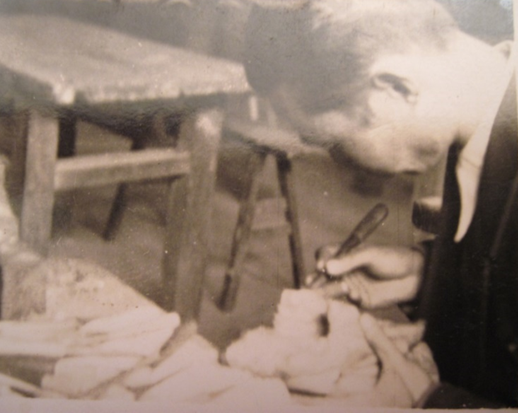
Boxwood carving
In his attic room, cluttered with sculptures at the top floor of an old building, he loved to invite his friends for a frugal meal. Joking about the cramped space, Yan used to say that if the ceiling was so low, it was only to let him reach out and catch the moon. In this small room, all these expatriates could forget the difficulties of their daily lives for a short while. They also found some comfort by talking about fond memories and the hopes they carried for the future of their motherland – a future in which they would offer their artistic contribution.
Several letters from his friends attest to his generosity – in addition to the money he tried to send to his family according to his financial resources, he also provided moral and financial support to those who asked him.
The lives of Chinese artists, like those of all Parisians, began to change during the week of August 19-25, 1944, when Paris was liberated after four long years of occupation.
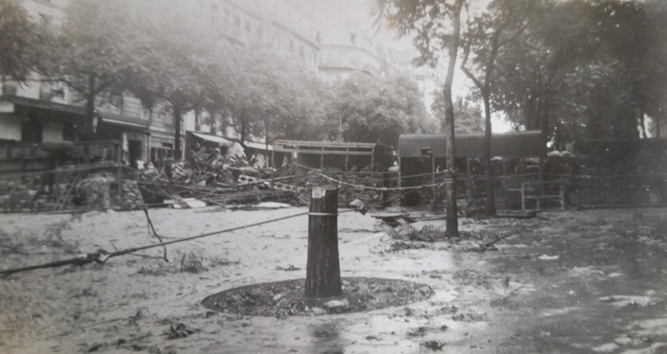
Barricades in the south of Paris, August 1944
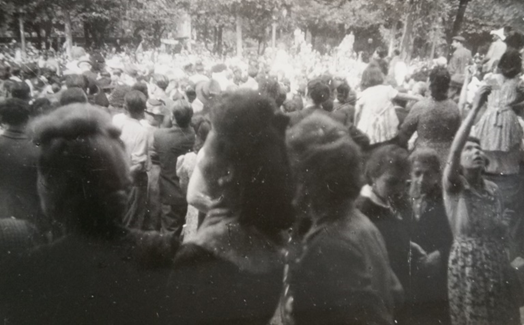
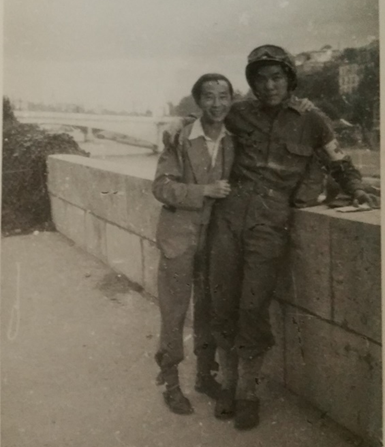
In liberated Paris, Yan participated in the general jubilation
If the financial difficulties remained significant, there were not only dark hours.The many photos taken during country walks, outings with friends, festive meals, bear witness to an important social and convivial life, despite the general destitution in a ravaged post-war country. The group particularly enjoyed picnics around Paris, so popular during the Belle Epoque and reminiscent of the theme of “Lunch on the Grass” dear to the Impressionists of the previous century.
Then, Yan’s life gradually improved and, on April 28, 1948, he moved into an artists’ residence at 35 rue de la Tombe-Issoire, 14th arrondissement, shortly after the departure for China of Hua Tianyou who had also lived at this address. Yan Dehui’s lease indicates that he occupied the studio No. 8, on the ground floor overlooking the courtyard. He remained there until the eviction of all tenants in 1964, as the site had been sold to build new housing.
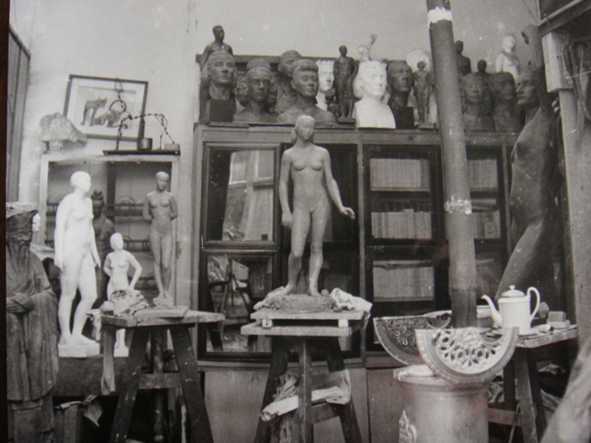
Yan Dehui’s last Parisian studio – 35 Rue de la Tombe-Issoire – 75014 Paris. It was later transferred to Burgundy
In 1949, he met Louise Lenoir, whom he married four years later.
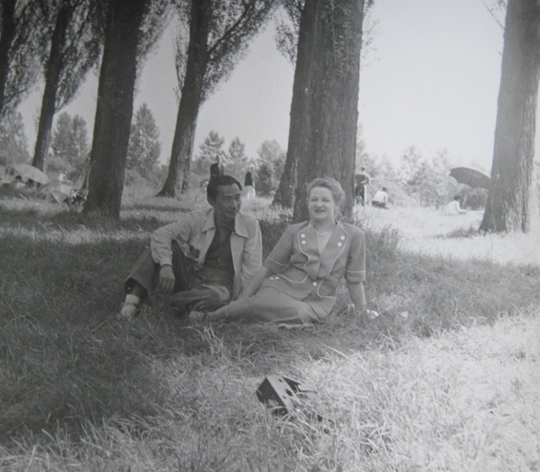
First rendez-vous
Yan was Henri Bouchard’s last Chinese student and he continued to maintain cordial relations with his former ENSBA teacher.
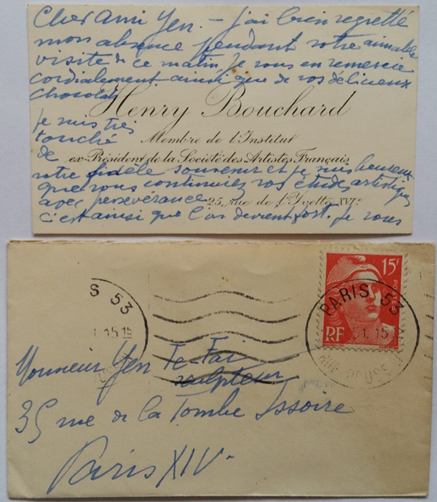
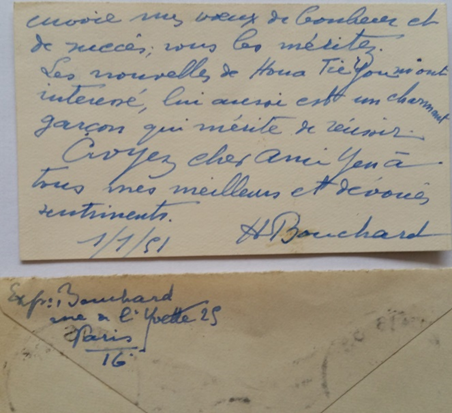
Card written by Bouchard to his former student in 1951:
“Dear friend Yen,
I much regretted my absence during your kind visit this morning. I sincerely thank you for it, as well as for your delicious chocolates. I am very touched by your faithful remembrance, and I am glad that you are continuing your artistic studies with perseverance. That is how one becomes strong. I send you my best wishes for happiness and success—you truly deserve them. The news about Hua Tianyou interested me; he too is a charming young man who deserves to succeed.
Believe me, dear friend Yen, in all my best and devoted regards.
1.1.51. H. Bouchard”
3. Stays in France and trips to Europe
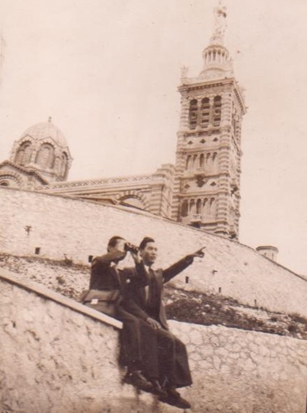
After the war, when their finances allowed, Chinese artists continued the tradition of the Grand Tour, visiting many museums, both in France and abroad – Italy, Great Britain, Netherlands, Belgium, Austria, Switzerland, Greece, Spain.
While staying in Greece, Yan completed an internship to refine his skills in ancient sculpture and statue reproduction. His photographs capture everyday life in the places he visited.
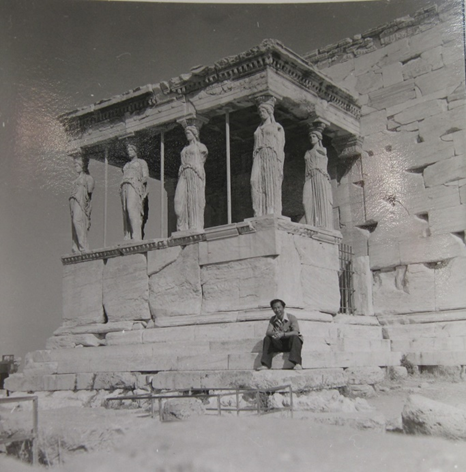
Stay in Athens, Greece, September 1950
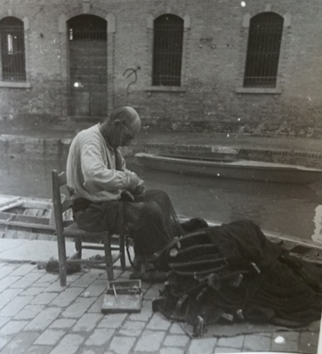
Venice, 1950
Coming from a country where art was reserved for an elite, Yan was struck by the richness of Parisian museums, open to all. In order to bear witness to this and with a view to teaching and transmission, he spent entire days at the Louvre photographing artworks, then developing his negatives and carefully transcribing the captions on the back of each print. He did the same when visiting French provincial museums, thus building up a substantial body of documentation.
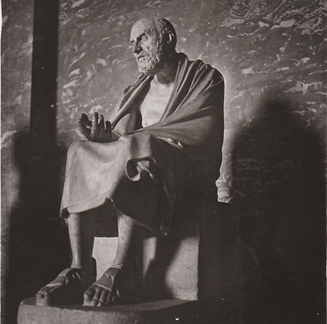
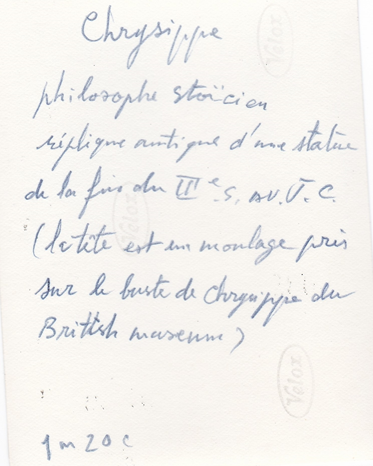
Chrysippe at Le Louvre
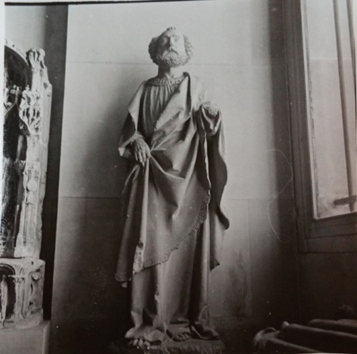
Statue of Saint Peter
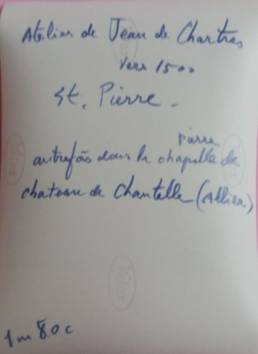
At the Château de Chantelle (Allier, France)
These trips were sometimes made with Chinese friends and sometimes with groups of French people.
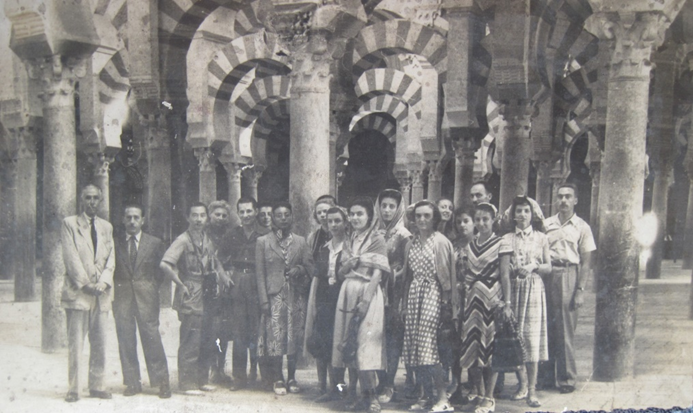
Trip to Spain in 1951 (still with his camera)
4. Commitment to peace
Born at the beginning of the 20th century, these Chinese artists experienced every possible devastation caused by conflicts of all kinds: two revolutions – the 1911 Republican Revolution and the Communist Revolution; two world wars, with in between, during the 1920s, the devastating internal struggles of the warlords; a first fratricidal civil war between Nationalists and Communists from 1927 to 1937, of which the Long March was a dramatic episode; two forms of occupation – first by Western powers since the middle of the 19th century, then by Japan from 1931 in Manchuria, extended to the coastal provinces in 1937, followed in 1945 by the resumption of the civil war between the Guomingdang and the Communist Party, which ended in 1949 with the establishment of the People’s Republic of China.
After such dire circumstances, it is not surprising that they wanted to participate in the movement for world-wide peace after 1945. Many associations were founded and flourished with an aim to prevent any future war. The Movement for Peace in China was established in late 1945. Among its founding members were Li Fengbai, Yan Dehui, the painter Fang Yong and the nuclear physicist Qian Sanqiang.
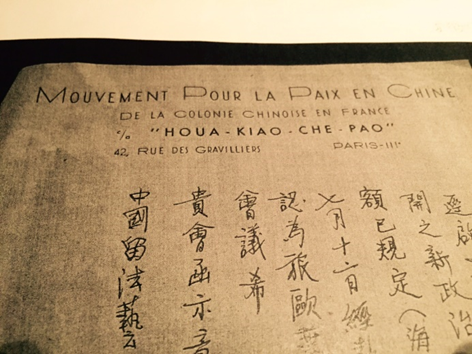
These artists, intellectuals, and scientists believed that a deeper understanding between nations could ward off the specter of war, and they saw art – a truly universal language – as the most powerful means of bringing people together. Conscious of their artistic duty to their country, they envisioned themselves, through this association, as mediators fostering mutual knowledge and appreciation between China and France.
Eager to contribute to this movement of cultural exchange on a personal level, in the early 1950s, Yan Dehui wrote to the Director of the Committee of Education and Culture of the People’s Republic of China. He envisioned bringing art to all, first by creating a large number of museums in each province, and then by producing casts of masterpieces, both Chinese and foreign, to distribute locally and internationally. He offered to lead this ambitious project and outlined a three-step plan to achieve it. Yet China, still exhausted from years of upheaval, was not ready, and it would take several decades before Yan’s vision could finally be realized.